
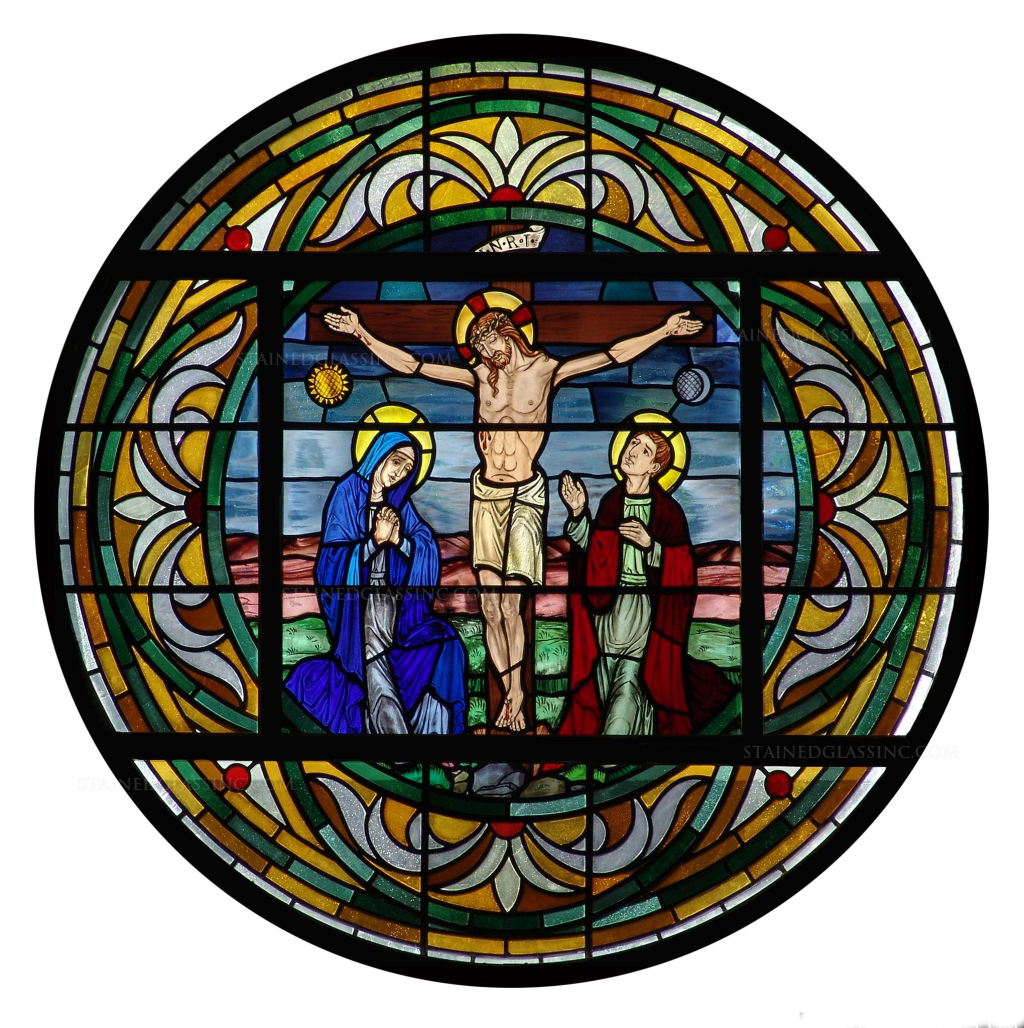
When Jesus had received the wine, he said, “It is finished.” Then he bowed his head and gave up his spirit (John 19:30).
But now apart from the law the righteousness of God has been made known, to which the Law and the Prophets testify. This righteousness is given through faith in Jesus Christ to all who believe. There is no difference, for all have sinned and fall short of the glory of God, and all are justified freely by his grace through the redemption that came by Christ Jesus. God presented Christ as a sacrifice of atonement, through the shedding of his blood—to be received by faith. He did this to demonstrate his righteousness, because in his forbearance he had left the sins committed beforehand unpunished— he did it to demonstrate his righteousness at the present time, so as to be just and the one who justifies those who have faith in Jesus (Romans 3:21-26).
Once upon a time my wife and I decided to buy a car. We were not looking for a new car; we knew we could not afford that. We just wanted one that was new to us, to replace our old beat up jalopy that was on its last legs. (Hmmm; should that be, ‘on its last wheels?’) So we put together the two nickels that we had saved up and went to the car dealership. We saw many bright shiny new cars, and they looked pretty and they had sprayed them on the inside with a spray bottle to give it that special “new car smell.” We liked them, but we knew they were out of our price range. We looked at some late model used cars: pre-owned, they called them, so that we would know that the major burden of being the first owner of these cars had already been taken care of for us. Such strong customer service!
We found several cars that we liked. We picked out the one we liked the best. We proudly held out our two nickels to buy that car.
As it turned out, our two nickels did not add up to enough to buy that car. That was disappointing. So we turned away, sad. But before we could walk away, they called us back, and told us they could set us up in this thing called an auto loan. We could have a contract where we would pay them money every month, for years and years, or maybe the rest of our lives, and if we agreed to that, then we could have this wonderful car.
As it turned out, it did not take the rest of our lives to pay off that loan. For a while, though, it sure did feel like it. Every month, making that payment. World without end, except we didn’t feel like saying Amen. But one day it happened: we sent in the last check. And then we received a letter, indicating that the contract had been paid in full. Paid. In. Full. Wow.
But wait: there’s more – and it gets worse. Once upon another time I decided to go to graduate school. That was an expensive decision. I had no idea how expensive it would turn out to be. I had a scholarship, and eventually a fellowship, and I worked two part time jobs: but it wasn’t enough. We ended up taking out a student loan, year by year, and I finished the Ph.D. program at Boston College with a student loan debt of well over $50,000. Ouch. Education is expensive.
I remembered how I’d thought that that car payment would last the rest of my life, but this was worse. When I did the math to figure out just how long it would take to pay off this loan, it appeared that I wouldn’t get to the last payment until I had been dead ten years and four months. I thought, “This is not the legacy I wanted my children to remember me by.” But the day finally came when I sent in the last payment. I was a happy man. And three weeks later, I got a letter in the mail, affirming that indeed, all my student loans had been paid in full. Paid. In. Full.
And once upon yet another time God had a problem. God loved us and wanted to forgive us for all our sins. And when you’re God, you should always be able to do what you want. I mean, what’s the point of omnipotence if you can’t do whatever you want? But here’s the thing. Suppose God listens to my prayers when I pray, “Forgive us our debts, as we forgive our debtors.” You probably remember from Sunday School that that’s not really about financial debts, the money one person owes to another person; it is primarily about the debt we owe to God, a debt of obedience to God’s will, a debt of righteous behavior; we owe God heartfelt devotion, rather than money. And since we have failed to be obedient, since we have failed to behave righteously, since we have failed in heartfelt devotion – not every single second, we do get it right sometimes, too – yet since we have failed to do what God has called us to do, that’s a debt we haven’t paid.
But some churches feel like that nuance is hard to get; and when they pray the Lord’s prayer, they don’t want people to imagine that it must be about some monetary debt, and so they use the word trespass: forgive us our trespasses, as we forgive those who trespass against us. And maybe that’s clearer: to trespass is to cross the line, to go some place I have no business going, to trample on someone else’s land. But maybe that’s actually not clearer, because just like debts doesn’t mean I owe God actual money that I haven’t paid, so also trespasses doesn’t mean I went walking on God’s property without asking permission, totally ignoring the No Trespassing signs.
And so when some other churches pray the Lord’s prayer, they skip both of those terms, and simply say “forgive us our sins, as we forgive those who sin against us.” And that’s clear: we are asking the Lord to forgive our sins. But lots of people don’t like reciting the Lord’s prayer that way. They say, “I learned it with the traditional wording” – whether their tradition was debts or trespasses, either way – “and that’s the way I know it, and so that’s the way we should say it.”
So, as I was saying: suppose God was listening to my prayers when I prayed, “Forgive us our debts.” And suppose God did that, and said, “My child: you know all that money you owe on that car loan? Well, I forgive you for that debt. You prayed that I would forgive you your debt, and I do. It’s wiped away, just by divine omnipotence.”
And I would say, “Wow. That’s great!”
But the car dealership would say, “Wait, what? No way! He owes us that money! We lent it to him, so he could buy that car. That’s a major part of our business, lending people money: it’s what we do. If you tell him he doesn’t have to pay it back, God, then you are causing us to lose money. That’s unjust. Surely the God of all the earth will be righteous, and insist that the debt must be paid, instead of just dismissing our claim; surely the Lord of justice would not rule that he doesn’t have to fulfill the contract and pay us back the money we lent him.”
But while they were saying that, I would be saying, “God, I really really appreciate you forgiving my car loan. But you know, the balance on that car loan was only about $7000. There’s also this student loan, and the balance on that is more than $50,000, and even though I’m paying a lot on it every month, that mostly just covers the interest on it, and I think it will take a hundred years to pay it all off, and I expect I’ll be long dead by then. So, while you’re answering that ‘forgive us our debts’ prayer, could you just take care of that student loan debt, too?”
And God would say, “Sure. I meant that one, too. All of that debt: it’s forgiven. Set your mind at ease: you don’t have to pay that back.”
And now it’s not just some car dealership that speaks up. It’s a specialty bank chartered by the United States government, and their entire business is student loans, and they say, “No, no, no! That debt is a sacred obligation. Sacred. That has to matter. Listen, Lord: if you want to forgive his debts to you, whatever they may be, that is completely up to you. We understand that. But it would be terribly unjust if you were to forgive the sacred obligation that he owes to us. We lent him that money in good faith: good faith, Lord. And he promised to pay it back, and he absolutely has to repay it. If you say he doesn’t have to, then we are losing a lot of money, and that’s not fair. It might sound great, to forgive everyone’s debts, but if you decide to be that generous to him, you’d also be deciding to be unjust to us. And how could it be right if you, the God of all righteousness, end up establishing an injustice by allowing him to defraud us of the money he owes us?”
But, as I said a minute ago, when we pray “forgive us our debts,” that’s not really about finances, about money borrowed that needs to be repaid. It is about the obligations that we owe to God, which we haven’t fulfilled, and so we have an unpaid debt. As the old Anglican prayer book put it, “we have left undone those things we ought to have done, and have done those things we ought not to have done.” (These are sometimes called our sins of omission and our sins of commission. You can take a moment and ponder on whether you’ve had the most trouble with the things you’ve done or with the things you’ve left undone.)
When we have sinned, that makes us guilty of the sins we have committed. How can God make us not guilty of committing those sins when we are in fact guilty because we did in fact sin those sins? Or, to put it the other way around, how can God make us righteous when we have actually done things that make us unrighteous? We have committed sins, we have acted unjustly, we have been unrighteous: what action can God take that will reverse this? By our own actions we have made ourselves sinful, guilty, unjust, unrighteous: in the face of that, what action can God take that would make us actually pure, innocent, just, righteous? How could God do that?
Well, and as if that’s not hard enough, how can God do that and at the same time maintain the highest standards of justice? The justice of God demands that the debt must be paid; how can God simply dismiss the debts we all owe, wave away all our unrighteousness and guilt, and pretend that we never did anything wrong? How can God freely forgive us our debts, and still fulfill the demand of justice that the debt must be paid?
There’s a term in the Bible that describes this process: justification. It’s an important word, and it doesn’t mean what you would probably guess. If I’ve got a friend named Mark and I say, “Mark is trying to justify his actions,” that usually means that Mark’s behavior has been bad, but he’s trying to come up with some excuse or rationalization to explain it away, as if he didn’t do anything wrong. When the judge decrees that there’s no justification for what Mark has done, that means Mark cannot justify his actions by saying something like, “Ah, well, I didn’t really mean it” or “it was an unforeseeable accident” or anything else that would try to make it appear that what he did was maybe not so bad.
But in the Bible, the words justify and justification mean something different from that. In the Bible, to justify your actions doesn’t mean making up some phony excuse to make it look like what you did was kind of okay. In the Bible, justification doesn’t mean to come up with some mitigating circumstance so that even though what you did was wrong, it wasn’t as awful as people might think. Instead, in the Bible these words mean that you were sure enough guilty, but God has taken action so that you are no longer guilty: God has made you not guilty. It is not about excusing your guilt, offering rationalizations about it, deciding maybe it wasn’t so bad. Instead, it is about God recognizing the full badness of your guilt, and then by divine power establishing that although you have been a guilty sinner, you are nevertheless now established as righteous.
This idea can be hard to grasp, so I’m going to say it again a different way. When the Bible talks about justification, it recognizes that God has done something, transforming you from guilty sinner to righteous saint. (How’s that working out for you? What are you doing, to live into the new reality God has established for you? Or, if that’s not going so well, what’s getting in the way of you doing that?) When we say God justifies us, it doesn’t mean God shrugs away our sins; it means that God turns the unrighteous into the righteous, God makes the unjust into the just. When God justifies us, it means he transforms us into something we previously were not.
To put it yet one more way: Justification is not a mental process where we learn to think about ourselves a different way. It is instead a shift in reality, where God changes us from one thing into another. It is not about how we understand ourselves; it is about the miraculous power of God to transform our selves.
Can God justify all the sinners of the world? Not “can God excuse all the sinners of the world,” but “can God transform all the sinners of the world?” Can God be the justifier who justifies the whole world?
Well. If we believe in God, we are used to thinking that when a question starts out, “Can God … ” the answer must be Yes. So the answer to the question “Can God be the justifier of the world?” must be Yes. We would reckon it certainly must be within the capacity of God’s omnipotence to establish the reality that all of us sinners are forgiven, free, transformed into righteousness, even though previously we were guilty and unable to offer any excuse.
But wait. Can God be the righteous judge, who fairly establishes justice for every case in the history of the world when one person has sinned against another? That’s going to require a lot of judgment. All of your sins, all of my sins, sins that have hurt members of our families, sins that have hurt our schoolmates, our neighbors, our coworkers; sins that have hurt our enemies; sins that have hurt other people in the world, people we don’t even know, because our actions were heedless of the damage we did to the environment, to the community, to people who lived downstream from us: can God be the righteous judge, fairly measuring out to each one of us the just punishment for all of our sins? Can God establish the full measure of justice, an eye for every eye, where the damage we have done comes back upon us, where full payment needs to be made in order to discharge our debt? Can God be just?
And again, we would suppose that for this question, too, since it starts out, “Can God … ” the answer must be Yes. Surely it is within God’s power to offer just judgment against all the sinners of the world.
There is a certain amount of complexity to each of these two questions, so I don’t want to suggest that answering them is easy. Still, both questions were relatively straightforward. But this next question is much harder: Can God be both? Can God be just and justifier? Can God be just, and demand that the full punishment for every sin must be paid? Can God be justifier, and establish all the sinners as righteous, without them having to pay the penalty for their sins? Can God accomplish both of those tasks? Can God be both just and justifier?
Again, it’s clear that God could certainly insist that the full payment of every debt, the due punishment of every sin, must be paid. Every mean thing that anyone ever did to you, they will be fully punished for that. Every time someone lied, cheated, or stole from you – stole your money, stole your idea, stole your time, cheated on your relationship, cheated on their contract, cheated to win the game or the prize you should have won, lied to you about what they had done, lied to the customers, lied to the public so that you ended up with the blame, every act of dishonesty against you, every bit of unfaithfulness you have suffered at someone’s hand, every sin against you, large and small, God can certainly insist that justice must be done. Psalm 75:8 symbolizes the judgment of God by saying that in the hand of the Lord there is a cup filled with foaming wine, and all the wicked of the world will have to drink it down to the very dregs. Every single drop of the wickedness of the sinners must be punished. Yet that means that every single drop of your wickedness, and every single drop of my wickedness, must also be punished. There is no escape for any of us from the righteous judgment of God.
And it is equally clear that God could decide not to do it that way. Suppose God says, “There’s a passel of sinners out there, sure, but I forgive them all.” Consider someone who murdered six people. Suppose God says, “No problem.” Or someone who exploited people for decades. Suppose God says, “No big deal.” Here is a political leader who ordered the arrest and torture and death of thousands, tens of thousands, millions of people. Suppose God just shrugs. Those who have suffered cry out: “Grant us justice, O Lord! Make our oppressors pay the price for what they have done to us!” And suppose God says, “You know, I’m just not all that interested in that. I’m simply going to issue a blanket pardon for everybody.”
I think most of us see that there would be something terribly wrong, if God shrugged at the idea of justice. If God said, “I don’t care how bad you were, I don’t care how many people you hurt, I don’t care how much suffering you caused: everyone is home free, no debt to be repaid, no retribution, no penalty.” If that’s the way it is, if God doesn’t care about justice, then can we even say that the Lord is the God of righteousness?
But suppose the Lord, the God of righteousness, does insist on justice. Then all those mean things other people ever did to me have to be paid for. Ha. Serves them right. But wait. If all the mean things other people did have to be paid for, then all the mean things I ever did to other people have to be paid for, too. God can insist that the due punishment of every sin must be paid: all of my sins, large and small, every bit of dishonesty, every time I’ve pressed to get my own way at the expense of others.
This series of essays has been exploring the things that Jesus said on the cross, as the gospel writers have reported them. This is traditionally called “The Seven Last Words of Jesus.” As we have seen, these are not simple sayings, easy to grasp: even while dying on the cross, Jesus was saying theologically deep, biblically complex utterances. And even though people sometimes call them “The Seven Last Words of Jesus,” most of these sayings are longer than a single word.
But perhaps you remember last week’s ‘word,’ which is usually translated as three words: “I am thirsty.” Yet in the Greek text it is actually just one word: διψῶ (dipso). Meanwhile, today’s ‘word’ –
When Jesus had received the wine, he said, “It is finished.” Then he bowed his head and gave up his spirit (John 19:30)
– is also just one word, the Greek word τετέλεσται (tetelestai), traditionally translated as “it is finished.” It comes from a Greek root word that means to bring to completion. So “it is finished” is a good translation. But other translations would also be good: “it is fulfilled” or “it has been completed” would work equally well. If we are thinking about this word in regard to the mission of Jesus, we might translate tetelestai as “Mission accomplished.” If we are thinking about the means by which justice will be established – namely, by paying the full penalty for all the world’s sins – then we might translate tetelestai as “Paid in full.”
So suppose that, once upon a time, you were a merchant importing goods across the national border. You would have to pay a tariff or import tax on the value of your merchandise. The tax officer would inspect your cargo, assess its value, and give you a bill for how much your tariff would be. (This is perhaps the job that Matthew the tax collector had, working from the border town of Capernaum, collecting the import tax as caravans crossed the upper Jordan river from Syria into Galilee.) When you had paid the tariff, the tax man would write tetelestai on your bill, so that if another officer questioned whether or not you had paid the import tax, you could show the bill, and there would be the official designation, tetelestai, which would mean the taxing process “is complete” – your goods had been evaluated by the tax agent, the amount due has been noted, and you have paid the money, so in today’s language we would translate that as “paid in full.” Or if you had borrowed money, and made monthly payments until you had paid all you owed, then you would get a receipt for your payments, and on the bottom they would write the word tetelestai, to indicate that your debt had been paid in full. We don’t know for sure how they did it: writing the word by hand, or perhaps by dripping hot wax on the document and impressing an official seal to indicate it. (When I got the letter from the bank indicating that my student loan was now paid off, they did not hand write τετέλεσται in fancy Greek letters, and they certainly did not use sealing wax pressed with an official emblem. But they did send the letter on very nice paper, and it did indeed say “Paid in Full.)
And so when Jesus said tetelestai, that one word did double duty. It meant “mission accomplished,” which is to say, Jesus had finished his assigned task; he had brought to completion the mission for which the Father had sent him. And it meant “paid in full,” because the debt we owed to all those we had sinned against, our debt to God and our debt to those whom we had injured in various ways, had now been fully paid.
The Apostle Paul comes at the question this way:
But now apart from the law the righteousness of God has been made known, to which the Law and the Prophets testify. This righteousness is given through faith in Jesus Christ to all who believe. There is no difference, for all have sinned and fall short of the glory of God, and all are justified freely by his grace through the redemption that came by Christ Jesus. God presented Christ as a sacrifice of atonement, through the shedding of his blood—to be received by faith. He did this to demonstrate his righteousness, because in his forbearance he had left the sins committed beforehand unpunished — he did it to demonstrate his righteousness at the present time, so as to be just and the one who justifies those who have faith in Jesus (Romans 3:21-26).
So God wants to be just, to act to establish righteousness with regard to all the sinners. And God wants to be the justifier, the one who forgives and restores and sanctifies all the sinners. Yet it appears that to do one of these is to rule out the other. If God is just, it seems he cannot be the justifier of the sinners: he must be the righteous judge who punishes the sinners. If God instead is justifier, then it seems he cannot be just: he will not be the one who exercises divine punishment on the sinners, but will instead be the one who forgives all the sinners.
Can God be just and justifier? As before, the answer to a question that starts out, “Can God … ” is supposed to be Yes. Yet doesn’t the very definition of “justice” rule out forgiving all the sinners for all the damage they have caused: doesn’t it require that punishment must be meted out? And meanwhile, doesn’t the very definition of “justifier” rule out executing punishment for the sins of all the sinners?
Romans 3:21-26 is a complex passage, worthy of a great deal of study. We might puzzle, for example, over the way that Paul insists that “all have sinned” (apparently including everyone in the world) and then declares “all are justified.” (Wait! Everyone in the world is justified?) For today, though, I ask you to notice what the last couple of lines say. Paul declares that God has found the way “to demonstrate his righteousness at the present time, so as to be just and the one who justifies those who have faith in Jesus.” Or, as the old King James put it, to “be just, and the justifier.” God insists on justice: all of the debt of all the sinners must be paid. God insists on justifying all the sinners: all the sinners shall be transformed into the righteous.
But can God actually do that? Can God insist that all debts of all the sinners must be paid, and also insist that all the sinners must be forgiven without them paying any penalty? Can God be both just and justifier?
Let me suggest that this problem could not have caught God by surprise. This question, can God be both just and justifier, must have gotten serious deliberation within the eternal counsel of the Triune God. And then God the Son stepped forward and said, “In order for all righteousness to be fulfilled, all the debts must be fully paid. And I, I myself, will pay that price.”
We have been hinting toward this realization in several of the essays from preceding weeks. But now we are right in the midst of it. This was the plan all along. Jesus had become quite clear about this plan, from his reading of scripture and his prayers, and he shared this understanding with his disciples. But they were baffled by it. What could it mean that Jesus was going to die, and be raised? I imagine that they said to one another, “What is he saying? Is this one of those parables that seems to mean one thing but actually means something else? I just don’t get it.”
There was Jesus, hanging on the cross. There was God the Father, seeking to be both just and justifier, wanting to see to it that justice was completely fulfilled: the due penalty for every wrongdoing must be established, and paid. And also wanting to save the world: all the sinners need to be forgiven and redeemed. And so Jesus accepted the weight of all of the sins of all of the world, all the guilt of all those sins, taking the full extent of all the punishment. And God the Son, seeking just as much as his heavenly Father to be both just and justifier, was dying from the burden of all those sins. And as he died, he looked up to heaven, and said: “Paid in full.”

 james-ayers.com