
Once upon a time there was a man named Mitchell Murray. Everyone called him Mitch. Mitch thought of himself as an ordinary guy: 53 years old, a little overweight but still able to hit a softball over the fence. He’d been married; he’d been divorced; his kids were doing well, age 29 and 26. So he went to his job day by day, played softball with the guys during the summer, and tried to get along.
It was a church softball league. Mitch played on the team at the Presbyterian Church: they were called The Elect. The team from First Baptist was called The Believers. The team from Saint Agnes Catholic Church was called The Saints.
Mitch didn’t think of himself as a saint, by any means. He thought of himself as a regular churchgoer, though in truth he only made it to church once or twice a month. And even though the Baptists had claimed the name, Mitch thought of himself as a believer. He knew God is real. He had come to recognize that he’d been pretty naive about it, when he was a kid and his mother had taken him to Sunday School and church every week. He felt like he was a little more grown up about it now. One of the challenges of this world is to make the transition from the simple faith of your childhood to a faith that is rigorous and complex enough to grapple with grown-up problems. Not everyone makes that transition too well.
And Mitch had a grown-up problem. He wasn’t sure if his faith was able to grapple with it. Mitch’s grown-up problem was this: he had told a lie.
Most of the time, people don’t worry about it if it some of the things we say don’t turn out to be the strict truth. For example, we sometimes tell jokes: Two termites walk into a bar. One of them asks the other, “Is the bar tender here?”
Or we exaggerate the size of the fish we caught. Politicians spin the narrative. In the movies they rewrite the narrative from the novel – and it was already fiction. In all such cases someone is saying things that are not the strict truth. And we tell ourselves that it doesn’t really matter.
But Mitch had told a lie that did matter. It was a lie that had gotten one of his coworkers fired. Mitch had told the lie, as if he had heard it from someone else, as if he were worried about what he had heard. With malice aforethought he reported to others that he had “overheard” this, and asked whether they had heard it too, and to question and doubt it – “You don’t think it could be true, do you?” – even as he continued to spread it.
You see, this coworker, Bill, had made a joke at Mitch’s expense. It hadn’t been a terrible joke or a cruel joke, but it was a little mean. Mitch had laughed, at the time, but it had made him mad, and he had decided to get even. Or maybe a little more than even. For more than six months he stewed about this, plotting his revenge. He knew he had to be sly about it. And he had succeeded. He had managed to tell his lie in a way that was not easy to trace back to him.
He didn’t think it had ever been his intention to get Bill fired. He had wanted him to be embarrassed, sure. He had wanted Bill to be hurt. But fired? Not really. Still, when the whole thing started to snowball, he could hardly speak up and say, “Hey, it’s all a lie, I know because I’m the one that started it.” He couldn’t do that.
So Bill had gotten fired. He’d been gone almost a year now. The rumor and the firing had created a messy situation, but it had all died down, and there didn’t seem to be any suspicion that it had all been a lie perpetrated by an angry coworker. No inquiries from Personnel. “Only God knows what I did,” Mitch thought, “so I guess I got away with it.”
But he still felt guilty about it. All he had wanted was to get even. Or, indeed, a little more than even. But he hadn’t planned on the total destruction of the man’s career. He had heard that Bill had moved out of state. Had he found a new job somewhere? Mitch didn’t know.
So at this one Friday evening softball game, The Elect had beaten the team from Saint Agnes 15 to 12, and then everyone went out for a few beers, along with nachos and hot wings. Saturday morning Mitch jolted awake with a painful start. It was dark. He rolled over to look at the clock. Or he meant to. He felt a terrible stab in his right shoulder, and it made him gasp. Had he done something to it at the game last night? He twisted just enough to see the time: 4:27 am. Then he felt another stab in his stomach: he was going to be sick, he was struggling to get out of bed to run to the bathroom, his shoulder was on fire, he could barely move, somehow he got his feet under him, he took two steps toward the bedroom door, and turned and grabbed the trash can just in time. Deep retching. Wow. What had he eaten last night to make him so sick?
It felt like the wrath of God had landed on him. He said that to himself, as kind of a smart-aleck remark, and then he thought, what if that’s right, what if the wrath of God really had landed on him, the wrath of God for the way Mitch’s get-even lie had snowballed and gotten Bill fired and wrecked his life?
Does God get to have wrath? Can God get angry? God is, after all, on record as being compassionate and gracious, slow to anger and abounding in steadfast love. The Bible tells us that God does not treat us as our sins deserve, or repay us according to our iniquities. God is perfect: but anger is messy. Does it fit with what we know about the God of grace and lovingkindness and mercy, to think about God raging, furious, spitting out bitter words and fiery deeds? Does it fit with what we know of God’s deep forgiveness to think about God overcome with wrath over our offenses, and vowing to get even with us, or maybe a little more than even?
Maybe not. Yet we all have this notion, don’t we, that a person could get on God’s bad side. And it’s not just our intuition about this. You can read warnings in the Bible that people should mend their ways, or they’ll feel the wrath of God. And stories about people who did in fact experience the wrath of God. Those stories don’t end happily-ever-after.
Perhaps those stories and warnings were more effective in motivating people, back in an earlier era. Over the years I’ve had a number of people tell me about their childhoods, yea these many decades ago, when they were sternly warned about the wrath of God, about hellfire and damnation, about eternal punishment: they were warned in order to motivate them to do what was right and to avoid what was wrong. And maybe that worked for people, back then.
My present-day experience, though, is that people aren’t much motivated by the idea of the wrath of God. They still might have an intuition about the wrath of God, and might even have read about it in the Bible; but not too many people today live their lives in fear of the wrath of God.
Suppose you’re tempted to fudge a few numbers on your tax return, to get a bigger refund. You figure you can get away with it. And then you think, “Oh wait, God will be angry if I do that. God will send me to hell for cheating on my taxes. I better not do it.” It appears to me that most people today don’t raise that issue with themselves. The fear of God’s wrath isn’t in the picture to motivate them to do what’s right.
Well, but suppose you’re tempted to hold a grudge against someone who has done something to hurt you. You figure you can get away with it. And then you think, “Oh wait, God will be angry if I do that. God will send me to hell for holding a grudge. Matthew 18:35 warns that those who fail to forgive each other end up in torment. I better not do it.” Once again, it appears to me that most people today don’t raise that issue with themselves. The fear of God’s wrath isn’t in the picture to motivate them to do what’s right.
Or suppose you’re tempted to tell a lie, to get someone in trouble or damage their reputation. You can see how to get away with it. And then you think, “Oh wait, God will be angry if I do that. God will send me to hell for telling a lie. It says in Revelation 21:8 that all liars end up in the lake of fire. I better not do it.” In all the different ways we get tempted, it appears to me that most of us don’t raise the issue of the wrath of God as we debate with ourselves about how we’re going to proceed. The fear of God’s wrath isn’t part of the picture to motivate us to do what’s right.
Fear of God’s wrath had not been in the picture for Mitch, when he started those rumors about Bill. When he was tempted to lie about Bill, he had not paused to think, “God will be angry if I go ahead: I better not do it.” The wrath of God was not something he had thought about. But he was thinking about it now. The pain in his shoulder and in his belly felt like he’d been shot. Somehow he had made it to the bathroom, and he lay there on the floor, shivering, aching. I need to go to the doctor, he thought. Or the emergency room, he thought. The wrath of God, he thought. The wrath of God has come down on me, because of what I did to Bill.
After another bout of heaving Mitch felt a little better. He still didn’t feel good. His shoulder throbbed terribly. His stomach still ached, and he felt emptied out, hollow.
He had gotten himself up off the bathroom floor, and gotten himself cleaned up. He didn’t like the look of himself in the mirror. He sat in the living room of his apartment, by the dawn’s early light.
When Mitch’s daughter was born, they had given her the name Alexandra. The plan was that they would call her ‘Alexa’ when she was sophisticated and wise and going to the prom, and ‘Lexie’ when she was casual and fun and playing softball. But when she was in ninth grade, she had decided to follow her own path. She liked the sound of the X in the middle of her name: kkkss. She decided she wanted to lead with that sound: kkkss. So she decided that she wanted to be called ‘Xandra,’ with a strong X as the opening consonant, so you could hear the K sound as well as the S. She told her friends, her teachers, her parents: from now on it’s Xandra. Not Sandra. Not Zandra. Her name was Xandra. It wasn’t like anyone else’s name. She liked it. That’s what she wrote, on the top of all her high school essays and assignments.
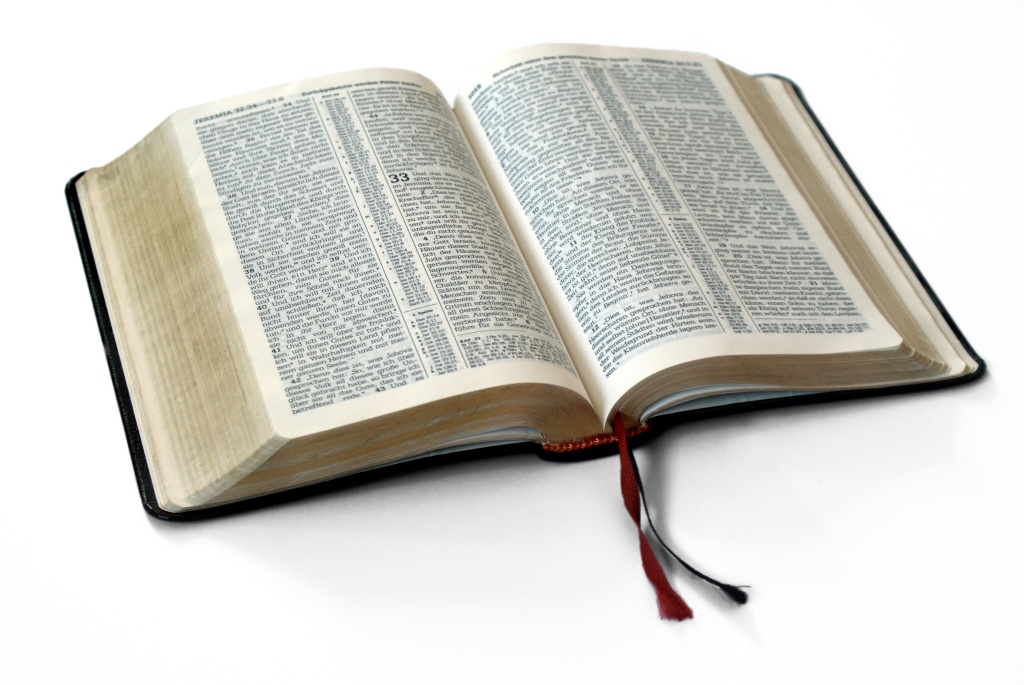
The Christmas of her senior year in high school, Xandra had given Mitch a Bible. Inside the front cover she had inscribed, “The best Book, for the best Dad. Love, Xandra.” For a wonder, Mitch still had that Bible, a dozen years later, even after he had left most of his belongings behind in the divorce. For a wonder, it was right there in the living room, on a shelf with a couple of knick-knacks and his trophy home run baseball from the district championship his senior year in high school. With morning light coming in the living room window, Mitch’s eye fell on that Bible: and for a wonder he walked over and picked up that Bible, and went and sat down in the kitchen and just let it fall open at random on the table in front of him. As it happened, it opened right in the middle, to the psalms. Mitch found himself looking at Psalm 38.
The opening verses of Psalm 38 say this:
Lord, do not rebuke me in your anger,
or discipline me in your wrath.
Your arrows have pierced me,
and your hand has come down on me.
Because of your wrath
there is no health in my body;
there is no soundness in my bones
because of my sin.
My guilt has overwhelmed me
like a burden too heavy to bear.
My wounds fester and are loathsome
because of my sinful folly.
Mitch reread those words in verse 3:
Because of your wrath
there is no health in my body;
there is no soundness in my bones
because of my sin.
And he thought, “The wrath of God has fallen on me.”
Psalm 38 is a passage that is easy to misread – and if we misread it, we will probably misapply it. The misreading happens when people propose that a text like this teaches us that people suffer the wrath of God because of their sin. God punishes people for their sinful folly with pain and distress and debilitating illness. And that must mean that if you’ve gotten sick, if some terrible suffering has come upon you, it’s because of your sin. So we need to delve into your soul and figure out what deep wickedness is there, to have made the wrath of God fall on you so bad.
This is, famously, what Job’s friends did with him, when the disasters wrecked his life: for 30 chapters his friends took turns trying to find the secret sin in Job’s soul, to explain all the suffering that he had experienced. But one of the main points of the book of Job is that his friends were wrong: their understanding was wrong, their attitude was wrong; their approach was wrong. So it would not be wise for us to emulate their misunderstanding and harsh attitude and bad approach, by supposing what Psalm 38 means is, if a world of hurt has landed on someone, it’s our job to help them figure out what their secret sin must be, that has caused them to suffer the wrath of God.
Once upon a time there was a girl named Xandra, who had to write an essay for her high school literature class. She decided to write her essay on the meaning of Psalm 38; and so she typed out a title: “Understanding Psalm 38.” And underneath that, her name: Xandra Murray.
Xandra took as her starting point the recognition that Psalm 38 is a poem. It shows us, in poetical form, how someone might grapple with the problem of guilt and sin and suffering and illness.
Because Xandra was an A student, she looked at two possible ways of reading this poem. One way she called the “literalistic universal” interpretation: the poem tells us exactly what happens, so that we’ll understand this is how it happens for everyone. The other way she called the “personal experiential” interpretation: the poem tells us how the poet feels, as he or she struggles to make sense of guilt and pain and suffering.
So Xandra’s essay probed these two ways of reading the psalm. She started with the literalistic universal interpretation. We might suppose, Xandra wrote, that since this is the Bible, all of its lines must be strict statements of the truth. But wait. We should notice, she said, that when the psalm says, “Your arrows have pierced me,” that hasn’t actually happened. It may feel like I’ve been shot by arrows, but those are metaphorical arrows: there are no actual arrows sticking out of my shoulder and my belly. The poem may say “there is no soundness in my bones” and “my wounds fester,” yet not every sinner has brittle bones and festering wounds.
Then she moved to the personal experiential interpretation. She noted that the psalm is a prayer, offered by some individual person to God. This person feels the burden of sin, and is suffering pain and illness. The poet describes the pain with a number of metaphors: it’s like an arrow from God, it’s like festering wounds, and later in the psalm it’s like burning in my flesh, it’s like being crushed beneath a heavy weight. Maybe the wrath of God had not been part of the picture, for the psalmist, a little while ago; maybe the psalmist had not said, “God might be angry, if I do this; I better not do it.” But now, in the midst of guilt and pain, the poet fears that this might indeed be the wrath of God, in all its fierceness.
As it turns out, Mitch had never read this paper. Parents sometimes miss seeing their children’s best work. He had never read Psalm 38 before, either. As he read these words, he wasn’t much thinking about which of these two ways he should read it. He just identified himself into the picture. And he found himself praying.
It’s interesting. Sometimes we go along as Christians, not paying all that much attention to God from day to day. Then something goes wrong in our lives, and we get mad at God for letting that happen to us, and we decide that we will no longer believe in God. If God isn’t going to bother to keep us safe from stuff like that, then we’re not going to bother to believe any more.
But in Psalm 38, when everything falls apart, the sufferer is still praying. The psalm begins: Lord, do not rebuke me in your anger, or discipline me in your wrath. That’s a prayer.
The psalm is also a frank admission of sin. It’s one person’s confession. It’s not someone else’s effort to point out someone else’s sin. It’s not an exposition about everybody’s sin. It’s an individual effort, someone trying to grapple with their own sin: it’s a personal confession, a personal prayer.
And someone prayed it, and wrote it down, and it got picked up and included in the Bible, because other people nodded, and sighed, and said, “Yeah. I’ve been there, too.” This prayer is in the Bible because sometimes we feel so bad about what we’ve done, and we don’t know how to put into words our anguish and our need for grace, and this psalm provides a way to express those feelings.
Specifically, Psalm 38 is not in the Bible because we needed a way to point out how bad other people are. We do that way too much already, without any help. Nor is it in the Bible because we needed to know that everything bad that happens to you is a direct result of your sin. Instead, we need to know that good and bad happen to everyone, on our best days and on our worst days.
Mitch read the opening verses of Psalm 38 out loud, as a prayer:
Lord, do not rebuke me in your anger,
or discipline me in your wrath.
Your arrows have pierced me,
and your hand has come down on me.
Because of your wrath
there is no health in my body;
there is no soundness in my bones
because of my sin.
My guilt has overwhelmed me
like a burden too heavy to bear.
My wounds fester and are loathsome
because of my sinful folly.
“I did this, God,” he said. “I was mad at Bill, and I held a grudge. ‘Forgive us our debts, as we forgive our debtors’ – I pray that in church, but I did not forgive Bill. Instead, I started that rumor about him. My lie got him fired. And I don’t know how to fix it.” And Mitch sat there at the kitchen table, and cried.
After a while, he stopped crying. His shoulder still hurt, but his stomach felt better: hollow, but not painful. He did not feel better about what he had done to Bill: and he realized why. He knew that God’s mercy had forgiven him for this sin, and he felt deep gratitude and peace in his soul because of that. But it would also be true that he himself would always carry the knowledge that he could be – and indeed had been – very wicked.
And it would also be true that Mitch couldn’t fix it. He could tell his boss what he had done, and maybe get himself fired: but that wouldn’t fix it. He could try to get Bill’s address and write a letter to say that he was sorry, but that wouldn’t fix it. He could resign from his job, or he could just die: but that wouldn’t fix it.
The worst sins of our past, for each one of us: they can’t be fixed. After we make them happen, we can’t make them unhappen. On the days when we sinned our cruelest sins, each one of us has made the world change, in a bad way. We can’t go back and unchange that change.
All of that became clear to Mitch, as he sat there at the kitchen table. He could not think of himself as a righteous person: he could never again think of himself that way. And yet, astonishingly, the Lord of grace and mercy had indeed forgiven him. “I’m a sinner, saved by grace,” Mitch said to himself. And he realized that, going forward, his life would have to be different: he would need to live on that basis, as a sinner, saved by grace. Day by day, he would have to learn how to do that.
 james-ayers.com